

Can a Stitchwelder be integrated into an automated production line?
Aug 28, 2025
In the modern manufacturing landscape, the pursuit of efficiency, precision, and cost - effectiveness has led to the widespread adoption of automated production lines. As a stitchwelder supplier, I often encounter the question: Can a stitchwelder be integrated into an automated production line? The answer is a resounding yes, and in this blog, I will delve into the details of this integration, its benefits, challenges, and the overall impact on production processes.
The Basics of Stitchwelders
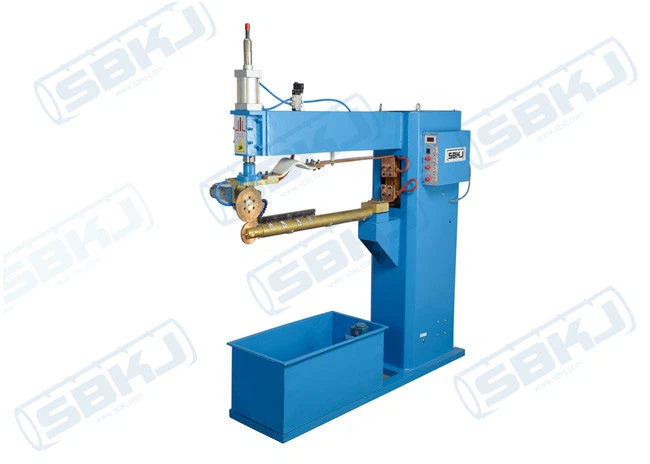
Before discussing integration, it's important to understand what a stitchwelder is. A stitchwelder is a machine used to create a series of spot welds in a linear pattern, often used in the fabrication of sheet metal products such as ducts, containers, and automotive components. These welds are made by applying pressure and electrical current to the workpieces at specific intervals, fusing them together.
There are different types of stitchwelders available in the market, including manual, semi - automatic, and fully automatic ones. The Automatic Stitch Welder is particularly relevant when considering integration into an automated production line. It offers high - speed operation, precise control over welding parameters, and the ability to work continuously, making it a suitable candidate for seamless integration.
Advantages of Integrating a Stitchwelder into an Automated Production Line
1. Increased Productivity
One of the most significant advantages of integrating a stitchwelder into an automated production line is the substantial increase in productivity. Automated systems can operate 24/7 without breaks, fatigue, or human error. The stitchwelder can be programmed to perform welding operations at a consistent pace, reducing the time required for each welding task. For example, in the production of round HVAC air pipes, an integrated stitchwelder can quickly and accurately weld the seams, allowing for a higher volume of pipes to be produced in a shorter period. This is in contrast to manual welding, which is not only slower but also subject to variations in quality due to human factors.

2. Improved Quality and Consistency
Automated stitchwelding ensures a high level of quality and consistency in the welding process. The welding parameters such as current, voltage, and pressure can be precisely controlled and maintained throughout the production run. This results in uniform welds with consistent strength and appearance. In the case of Production Of Round Hvac Air Pipe Seaming Welding Air Duct Machine, consistent welds are crucial for ensuring the airtightness and durability of the ducts. Any variation in weld quality can lead to air leakage, which is a major issue in HVAC systems.
3. Cost Savings
Although the initial investment in integrating a stitchwelder into an automated production line can be significant, it leads to long - term cost savings. By reducing labor costs associated with manual welding, minimizing material waste due to consistent weld quality, and increasing overall production efficiency, the return on investment can be substantial. Additionally, automated systems often require less maintenance compared to manual operations, further reducing costs over time.
4. Enhanced Safety
Welding operations can be hazardous, with risks such as electric shock, arc flash, and fume inhalation. Integrating a stitchwelder into an automated production line reduces the need for human operators to be in close proximity to the welding process. Automated systems can be equipped with safety features such as protective enclosures, interlocks, and fume extraction systems, ensuring a safer working environment.
Challenges of Integration
1. Technical Compatibility
Integrating a stitchwelder into an existing automated production line requires careful consideration of technical compatibility. The stitchwelder must be able to communicate and interface with other machines in the production line, such as conveyors, feeders, and control systems. Ensuring that the stitchwelder's control software can be integrated with the overall production line's control system is crucial for seamless operation. For example, if the production line uses a specific communication protocol, the stitchwelder must be able to support it.
2. Initial Setup and Programming
The initial setup and programming of the stitchwelder for integration can be complex. It requires a detailed understanding of the welding process, the production requirements, and the capabilities of the automated system. Programmers need to define the welding parameters, the sequence of operations, and the interaction with other machines. Any errors in programming can lead to production delays and quality issues.
3. Maintenance and Training
Once integrated, the stitchwelder and the automated production line require regular maintenance to ensure optimal performance. Maintenance technicians need to be trained to handle the unique requirements of the integrated system. Additionally, operators need to be trained to monitor and troubleshoot the system effectively. This requires an investment in training programs and the development of maintenance schedules.
Examples of Successful Integration
In the HVAC industry, many manufacturers have successfully integrated stitchwelders into their automated production lines for the production of round air ducts. By using Automatic Stitch Welder systems, they have been able to increase production rates, improve weld quality, and reduce costs. The stitchwelder works in conjunction with other machines such as coilers, seamers, and cutters to produce high - quality air ducts efficiently.
In the automotive industry, stitchwelders are integrated into automated production lines for the fabrication of body panels and other components. The precise and consistent welds provided by the stitchwelder contribute to the structural integrity and safety of the vehicles. The integration also allows for faster production cycles, enabling automotive manufacturers to meet the high demand for vehicles in the market.
Considerations for Integration
1. Customization
When integrating a stitchwelder into an automated production line, customization is often necessary. The stitchwelder may need to be modified to fit the specific requirements of the production line, such as the size and shape of the workpieces, the welding speed, and the overall layout of the line. A reputable stitchwelder supplier can work closely with the manufacturer to design and implement a customized solution.
2. Future Expansion
It's important to consider future expansion when integrating a stitchwelder into an automated production line. The system should be designed in a way that allows for easy addition of new machines or modification of existing processes. This ensures that the production line can adapt to changing market demands and technological advancements.
Conclusion
In conclusion, a stitchwelder can indeed be integrated into an automated production line, offering numerous benefits such as increased productivity, improved quality, cost savings, and enhanced safety. While there are challenges associated with integration, such as technical compatibility, initial setup, and maintenance, these can be overcome with careful planning and the expertise of a reliable stitchwelder supplier.
If you are considering integrating a stitchwelder into your automated production line, we are here to help. Our team of experts has extensive experience in providing customized stitchwelder solutions for various industries. We can assist you in every step of the integration process, from system design to installation and training. Contact us to start a discussion about how our Automatic Stitch Welder can transform your production line and take your manufacturing capabilities to the next level.
References
- ASM Handbook Committee. (2004). ASM Handbook Volume 6: Welding, Brazing, and Soldering. ASM International.
- Groover, M. P. (2010). Fundamentals of Modern Manufacturing: Materials, Processes, and Systems. Wiley.
- Welding Handbook Committee. (2007). AWS Welding Handbook, Volume 1: Welding Science and Technology. American Welding Society.