

How does a Round Duct Former work?
Sep 18, 2025
Hey there! As a supplier of Round Duct Formers, I'm super stoked to break down how these nifty machines work. You know, round ducts are all over the place in HVAC systems, industrial ventilation, and more. And a Round Duct Former is the key player in getting those ducts made efficiently.
Let's start with the basics. A Round Duct Former is designed to transform flat metal sheets into perfectly round ducts. It's like a magic box that takes a simple, flat piece of material and turns it into a functional and essential part of many systems.

The Initial Setup
First off, you gotta choose the right metal sheet. Most commonly, we're talking about galvanized steel, aluminum, or stainless - steel sheets. The thickness of the sheet depends on the application of the duct. For residential HVAC, thinner sheets might do the trick, while industrial applications often require thicker and more durable materials.
Once you've got your sheet, you need to prepare it. This might involve cutting it to the right size. Some Round Duct Formers have built - in cutting mechanisms, but in many cases, you'll use a separate cutting tool beforehand. You want to make sure the edges are straight and clean, as any irregularities can cause problems later in the forming process.
Feeding the Sheet
After preparation, it's time to feed the metal sheet into the Round Duct Former. The machine has an inlet area where you carefully place the leading edge of the sheet. There are usually guides in place to help you align the sheet correctly. And this is important because proper alignment ensures that the duct will be formed evenly and accurately.
The Forming Process
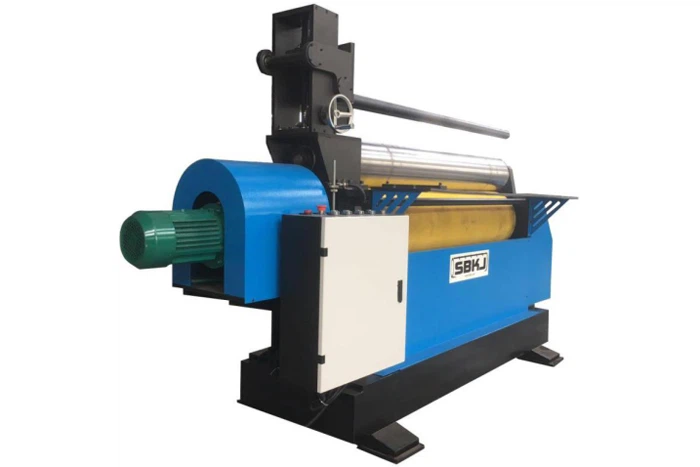
Now, here's where the real action happens. The Round Duct Former has a series of rollers. These rollers are the heart and soul of the machine. As the sheet moves through the machine, the rollers start to bend and shape the flat sheet into a circular form.
The rollers are arranged in a specific pattern. There are usually two or more sets of rollers, and each set has a different function. Some rollers are responsible for the initial bending of the sheet, while others work on refining the shape and making sure the duct has a consistent diameter.
Let's take a closer look at how these rollers work. The first set of rollers applies pressure to the edges of the sheet, starting to curve it. As the sheet progresses through the machine, subsequent rollers continue to bend the sheet further. The pressure and the angle of the rollers are carefully calibrated to ensure a smooth and gradual bending process. This helps prevent any kinks or wrinkles in the duct.
Joining the Edges
Once the sheet has been bent into a circular shape, the next step is to join the two edges together. There are a few different methods for this. One common method is using a lock - seam joint. The Round Duct Former can create a special lock - seam at the edges of the duct. This type of joint is strong and provides a tight seal, which is crucial for preventing air leakage in HVAC systems.
Another method is welding. Some Round Duct Formers can be equipped with welding units. Welding creates a very strong bond between the edges of the duct, but it requires more skill and additional equipment compared to the lock - seam method.
Sizing and Adjustment
During the forming process, it's important to ensure that the duct has the correct diameter. Most Round Duct Formers allow you to adjust the size of the rollers or the pressure applied by them. This means you can create ducts of different diameters according to your needs. Whether you're making small - diameter ducts for a home ventilation system or large - diameter ducts for an industrial factory, the machine can be adjusted accordingly.
Different Types of Round Duct Formers
There are a few different types of Round Duct Formers out there. One popular type is the Electrical - Driven Bending Machine. This type of machine is powered by electricity, which makes it easy to operate. It's often used in smaller workshops or for projects where you need to make ducts in relatively small quantities.
Another type is the Hydraulic Rolling Machine. Hydraulic machines use hydraulic pressure to drive the rollers. They are more powerful and can handle thicker and larger sheets of metal. These machines are great for industrial applications where you need to produce a large number of ducts quickly.
And of course, our star product, the Round Duct Former, combines the best features of different types of machines. It's designed to be versatile, efficient, and easy to use, making it suitable for a wide range of applications.
Quality Control
Throughout the forming process, it's important to keep an eye on the quality of the ducts. You want to check for things like the consistency of the diameter, the smoothness of the surface, and the strength of the joints. Many Round Duct Formers have sensors and monitoring systems in place to help with quality control. These systems can detect any irregularities in the forming process and alert you so that you can make adjustments.
Advantages of Using a Round Duct Former
Using a Round Duct Former has many advantages. First of all, it's much more efficient than making ducts by hand. The machine can produce ducts quickly and consistently, which saves a lot of time and labor costs.
Secondly, the quality of the ducts made by a Round Duct Former is usually much higher. The machine can create ducts with a precise diameter and a smooth surface, which is important for the performance of the HVAC or ventilation system.
Finally, Round Duct Formers are very versatile. You can use them to make ducts of different sizes and from different materials, so they can meet the needs of various projects.
Conclusion
So, there you have it - a breakdown of how a Round Duct Former works. It's an amazing machine that plays a crucial role in the production of round ducts. Whether you're in the HVAC industry, industrial manufacturing, or any other field that requires round ducts, a good Round Duct Former can make your life a whole lot easier.
If you're interested in purchasing a Round Duct Former or have any questions about our products, don't hesitate to reach out. We're here to help you find the right machine for your needs and ensure that you get the best results. Whether you're a small business just starting out or a large industrial operation, we've got the solution for you. So, let's start a conversation and see how we can work together to take your duct - making process to the next level.
References
- HVAC System Design Handbook
- Industrial Ventilation: A Manual of Recommended Practice
- Metal Fabrication Technology Guides