

How does a Round Duct Machine work?
Aug 07, 2025
In the field of HVAC (Heating, Ventilation, and Air Conditioning) system installation and manufacturing, round ducts play a crucial role. They are widely used for their efficient airflow characteristics, durability, and ease of installation. A round duct machine is an essential piece of equipment for fabricating these round ducts. As a reliable round duct machine supplier, I'm excited to share with you how a round duct machine works.
The Basic Components of a Round Duct Machine
Before delving into the working principle, it's important to understand the main components of a round duct machine. Generally, a round duct machine consists of a feeding system, forming rollers, a power system, and a control system.
The feeding system is responsible for delivering the flat metal sheet, usually galvanized steel or aluminum, into the machine. This system ensures a smooth and continuous supply of the material, which is essential for the efficient operation of the machine. It may include components such as conveyors, guides, and feeding rollers to precisely position the sheet metal.
The forming rollers are the heart of the round duct machine. They are carefully designed and arranged to gradually bend the flat metal sheet into a circular shape. These rollers come in different sizes and profiles, depending on the diameter and thickness of the round ducts to be produced.
The power system provides the necessary force to drive the forming process. It can be powered by an electric motor, a hydraulic system, or a combination of both. The power system must be able to generate sufficient torque to overcome the resistance of the metal sheet during the bending process.
The control system allows operators to set and adjust various parameters of the machine, such as the speed of the feeding system, the pressure applied by the forming rollers, and the diameter of the round ducts. Modern round duct machines often feature advanced control systems with touch-screen interfaces, which make the operation more intuitive and precise.
The Working Process of a Round Duct Machine
Now, let's take a closer look at how a round duct machine transforms a flat metal sheet into a round duct.
Feeding the Material
The process begins with the loading of the flat metal sheet onto the feeding system. The operator carefully positions the sheet to ensure that it is aligned correctly with the forming rollers. Once the sheet is in place, the feeding system starts to move it forward at a controlled speed. The speed of the feeding system is an important parameter that affects the quality of the final product. If the speed is too fast, the metal sheet may not be bent properly, resulting in uneven or distorted round ducts. On the other hand, if the speed is too slow, the production efficiency will be reduced.
Bending the Metal Sheet
As the metal sheet enters the forming area, it passes through a series of forming rollers. These rollers are arranged in a specific pattern to gradually bend the sheet into a circular shape. The first set of rollers usually applies a small amount of bending force to initiate the curvature of the sheet. As the sheet moves further through the machine, subsequent sets of rollers gradually increase the bending angle until the sheet forms a complete circle.
The design of the forming rollers is critical to the quality of the round ducts. They must be precisely machined to ensure that the bending radius is consistent throughout the length of the duct. Additionally, the surface of the rollers should be smooth to prevent scratches or damage to the metal sheet.
Seaming the Duct
Once the metal sheet has been bent into a circular shape, the next step is to seam the two edges of the sheet together to form a continuous round duct. There are several methods for seaming round ducts, including lock seaming, snap lock seaming, and welded seaming.
Lock seaming is a common method used in round duct manufacturing. It involves interlocking the two edges of the metal sheet to create a secure joint. This method is relatively simple and does not require any additional fasteners or welding. Snap lock seaming is similar to lock seaming, but it uses a snap-fit mechanism to join the edges of the sheet. This method is quick and easy to install, but it may not be as strong as lock seaming.
Welded seaming is a more permanent and strong method for joining the edges of the metal sheet. It involves using a welding machine to melt the edges of the sheet and fuse them together. This method is suitable for high-pressure applications or when a leak-proof joint is required. However, it requires specialized equipment and skilled operators.
Cutting the Duct
After the duct has been seamed, it is cut to the desired length. The cutting process can be performed using a variety of methods, including shearing, sawing, or laser cutting. Shearing is a common method for cutting round ducts. It involves using a pair of sharp blades to cut through the metal sheet. Sawing is another option, which uses a circular saw or a band saw to cut the duct. Laser cutting is a more precise and efficient method, but it requires more expensive equipment.
Different Types of Round Duct Machines
There are several types of round duct machines available on the market, each with its own unique features and advantages.
Manual Asymmetrical Plate Steel Metal Rolling Machine
The Manual Asymmetrical Plate Steel Metal Rolling Machine is a simple and cost-effective option for small-scale round duct production. It is manually operated, which means that the operator needs to control the feeding and bending process by hand. This type of machine is suitable for producing round ducts with small to medium diameters and is often used in workshops or small manufacturing facilities.
Round Duct Former
The Round Duct Former is a more advanced and automated machine that can produce round ducts with high precision and efficiency. It is equipped with a series of forming rollers and a control system that allows operators to set the diameter and length of the ducts accurately. This type of machine is suitable for large-scale round duct production and is widely used in HVAC manufacturing plants.

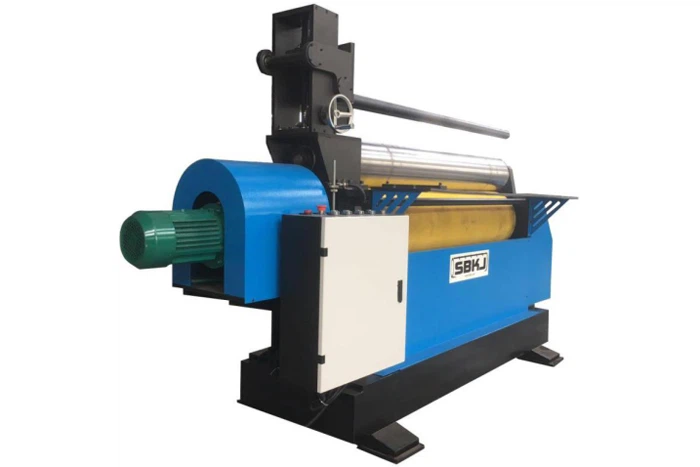
Hydraulic Rolling Machine
The Hydraulic Rolling Machine uses a hydraulic system to provide the necessary force for bending the metal sheet. It can generate a large amount of pressure, which makes it suitable for producing round ducts with thick metal sheets or large diameters. This type of machine is often used in heavy-duty applications and is known for its high performance and reliability.
Conclusion
In conclusion, a round duct machine is a complex and sophisticated piece of equipment that plays a vital role in the production of round ducts. By understanding how a round duct machine works, you can better appreciate the quality and precision of the round ducts produced by these machines.
As a round duct machine supplier, we are committed to providing our customers with high-quality machines that are reliable, efficient, and easy to operate. Whether you are a small workshop or a large manufacturing plant, we have the right round duct machine for your needs.
If you are interested in purchasing a round duct machine or have any questions about our products, please feel free to contact us. We look forward to discussing your requirements and helping you find the best solution for your round duct production needs.
References
- HVAC Systems Design Handbook, by American Society of Heating, Refrigerating and Air-Conditioning Engineers (ASHRAE)
- Metal Fabrication Technology, by Industrial Press Inc.
- Handbook of Sheet Metal Fabrication, by William H. Corcoran