

What are the types of Elbow Welders?
Nov 14, 2025
When it comes to the world of industrial manufacturing, especially in the realm of ductwork and pipe fabrication, elbow welders play a crucial role. As a well - established elbow welder supplier, I've had the privilege of witnessing firsthand the diverse range of elbow welders available in the market and understanding their unique applications. In this blog, I'll delve into the different types of elbow welders, their features, and the scenarios where they shine.
1. Manual Elbow Welders
Manual elbow welders are the traditional workhorses in the welding industry. These welders require an operator to control the welding process manually. They are highly versatile and can be used for a wide variety of elbow welding tasks, regardless of the complexity of the joint or the type of material.
One of the key advantages of manual elbow welders is their flexibility. Skilled welders can adjust the welding parameters such as welding speed, heat input, and electrode angle in real - time. This allows for precise control over the weld bead, ensuring high - quality welds even on irregularly shaped elbows. For example, when working on custom - made elbows for a unique HVAC system, a manual elbow welder can adapt to the specific requirements of the project.
However, manual elbow welders also have their limitations. They are labor - intensive, and the quality of the welds can vary depending on the skill and experience of the operator. Additionally, the production rate is relatively slow compared to automated systems. This makes them less suitable for high - volume production environments.
2. Semi - Automatic Elbow Welders
Semi - automatic elbow welders bridge the gap between manual and fully automatic systems. These welders automate some aspects of the welding process while still requiring operator intervention.
In a semi - automatic elbow welder, the wire feeding and sometimes the travel speed are automated. The operator is responsible for positioning the welding torch and controlling the start and stop of the welding process. This reduces the physical effort required by the operator and increases the consistency of the welds.
Semi - automatic elbow welders are often used in medium - volume production settings. They are cost - effective as they don't require the high investment of a fully automatic system but still offer improved productivity compared to manual welders. For instance, in a factory that produces a moderate number of standard HVAC elbows, a semi - automatic elbow welder can ensure a good balance between quality and production speed.
3. Fully Automatic Elbow Welders
Fully automatic elbow welders are the pinnacle of modern welding technology. These systems are designed to perform the entire welding process without any human intervention, from loading the elbow to completing the weld and unloading the finished product.
The main advantage of fully automatic elbow welders is their high production rate. They can work continuously, 24/7 if required, and produce a large number of identical elbows with consistent quality. This makes them ideal for large - scale manufacturing operations.

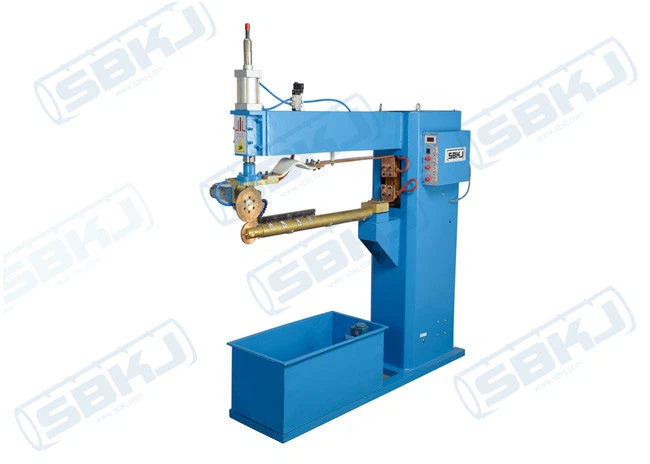
Fully automatic elbow welders are equipped with advanced control systems that can precisely control all welding parameters. They use sensors and robotics to ensure accurate positioning and welding. For example, in a large - scale HVAC duct manufacturing plant, fully automatic elbow welders can significantly reduce production time and labor costs.
However, fully automatic elbow welders come with a high initial investment. They also require specialized maintenance and programming. Any changes in the elbow design or welding requirements may need significant reprogramming of the system.
4. Orbital Elbow Welders
Orbital elbow welders are a specialized type of elbow welder that is used for welding circular joints. They work by rotating the welding torch around the circumference of the elbow joint.
One of the key benefits of orbital elbow welders is their ability to produce high - quality, circumferential welds. These welds are often required in applications where leak - tight joints are essential, such as in the food and beverage industry or in high - pressure piping systems.
Orbital elbow welders are highly precise and can achieve consistent weld quality even on small - diameter elbows. They are also suitable for welding different materials, including stainless steel, aluminum, and titanium. For example, in the production of pharmaceutical piping systems, orbital elbow welders can ensure the integrity of the joints, preventing contamination.
5. TIG Elbow Welders
TIG (Tungsten Inert Gas) elbow welders are known for their ability to produce high - quality, clean welds. They use a non - consumable tungsten electrode to create the weld arc.
TIG elbow welders are often used for welding thin - walled elbows, especially in applications where aesthetics and precision are important. They can be used on a variety of materials, including stainless steel, aluminum, and copper. For example, in the production of architectural ductwork, TIG elbow welders can create smooth, visually appealing welds.
However, TIG welding is a relatively slow process, and it requires a high level of skill from the operator. The equipment is also more expensive compared to some other types of elbow welders.
6. MIG Elbow Welders
MIG (Metal Inert Gas) elbow welders are a popular choice for many industrial applications. They use a consumable wire electrode that is continuously fed into the weld pool.
MIG elbow welders are known for their high welding speed and ease of use. They can be used for welding thicker materials and are suitable for high - volume production. For example, in the manufacturing of large - scale HVAC ducts, MIG elbow welders can quickly and efficiently join the elbows.
MIG welding can also be used with different shielding gases, depending on the material being welded. This allows for greater flexibility in the welding process. However, MIG welds may not be as aesthetically pleasing as TIG welds, and they may require some post - welding cleaning.
Applications and Considerations
The choice of elbow welder depends on several factors, including the type of application, production volume, material to be welded, and budget.
For small - scale, custom - made projects, manual or TIG elbow welders may be the best choice. They offer the flexibility and precision required for unique designs. On the other hand, for large - scale, high - volume production, fully automatic or MIG elbow welders are more suitable. They can ensure high productivity and consistent quality.
When considering an elbow welder, it's also important to think about the after - sales support, training, and maintenance requirements. A reliable supplier should be able to provide comprehensive support to ensure the smooth operation of the equipment.
As a dedicated elbow welder supplier, we offer a wide range of elbow welders to meet the diverse needs of our customers. Whether you are looking for a manual welder for a small workshop or a fully automatic system for a large manufacturing plant, we have the right solution for you.
If you are interested in learning more about our elbow welders, you can visit our website to explore our product range. You can find detailed information about our Elbow Welder. We also have information about our Automatic Stitch Welder and Production Of Round Hvac Air Pipe Seaming Welding Air Duct Machine.
We are always ready to assist you in choosing the right elbow welder for your specific requirements. If you have any questions or would like to discuss a potential purchase, please don't hesitate to contact us. Our team of experts will be happy to guide you through the selection process and provide you with all the necessary information. Let's work together to find the perfect elbow welder solution for your business.
References
- Welding Handbook, American Welding Society
- Industrial Welding Technology, various industry publications
- Technical manuals of different elbow welder manufacturers