
What is the control system of a Seamwelder?
Dec 05, 2025
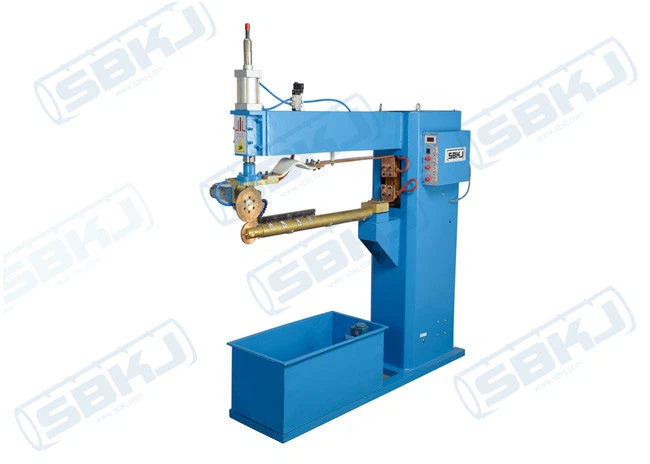
A seamwelder is a crucial piece of equipment in various industrial sectors, especially in the manufacturing of metal products. As a seamwelder supplier, I am well - versed in the control system of this remarkable machine. In this blog, I will delve into what the control system of a seamwelder is, its components, functions, and its importance in the overall operation of the machine.
Components of the Seamwelder Control System
Programmable Logic Controller (PLC)
The heart of the seamwelder control system is often the Programmable Logic Controller. The PLC is a digital computer used for automation of industrial processes. It can be programmed to control different aspects of the seamwelder, such as the speed of the welding wheels, the duration of the welding current, and the pressure applied during the welding process. For example, in the production of round HVAC air pipe seaming, the PLC can be programmed to adjust the welding parameters according to the diameter and thickness of the pipes. This ensures consistent and high - quality welds. The PLC also allows for easy modification of the welding program, which is essential when different products need to be welded.
Human - Machine Interface (HMI)
The HMI is the interface through which the operator interacts with the seamwelder control system. It typically consists of a touchscreen or a set of buttons and displays. Through the HMI, the operator can input welding parameters, monitor the status of the machine, and receive error messages. For instance, if there is an issue with the welding current or the speed of the welding wheels, the HMI will display an error code, allowing the operator to quickly diagnose and fix the problem. The HMI also provides a graphical representation of the welding process, which helps the operator to visualize and understand the operation of the machine better.
Sensors
Sensors play a vital role in the seamwelder control system. There are several types of sensors used in a seamwelder, including proximity sensors, pressure sensors, and temperature sensors. Proximity sensors are used to detect the presence of the workpiece and to ensure that the welding process starts at the correct position. Pressure sensors monitor the pressure applied by the welding wheels to the workpiece. This is important because the right pressure is necessary for a good weld. Temperature sensors, on the other hand, monitor the temperature of the welding area. If the temperature gets too high, it can cause damage to the workpiece or the welding equipment. By using sensors, the control system can adjust the welding parameters in real - time to ensure optimal performance.
Welding Power Supply Controller
The welding power supply controller is responsible for controlling the welding current and voltage. It ensures that the correct amount of power is delivered to the welding area. The controller can adjust the power based on the thickness of the workpiece, the type of material being welded, and the welding speed. For example, when welding thicker materials, more power is required. The welding power supply controller can also provide a stable power output, which is crucial for producing high - quality welds.
Functions of the Seamwelder Control System
Parameter Setting and Adjustment
One of the primary functions of the control system is to allow for the setting and adjustment of welding parameters. These parameters include welding current, welding time, welding speed, and pressure. The operator can input these parameters through the HMI, and the control system will ensure that the machine operates according to these settings. For example, in the production of round HVAC air pipes, different diameters and thicknesses of pipes may require different welding parameters. The control system can be easily adjusted to accommodate these variations.
Process Monitoring
The control system continuously monitors the welding process. It checks the status of the sensors, the welding current, the speed of the welding wheels, and other important parameters. If any of these parameters deviate from the set values, the control system can take corrective actions. For instance, if the welding current is too low, the control system can increase it to ensure a proper weld. It can also detect faults in the machine, such as a malfunctioning sensor or a problem with the welding power supply, and alert the operator through the HMI.
Quality Control
The control system plays a significant role in quality control. By ensuring that the welding parameters are maintained within the specified range, it helps to produce consistent and high - quality welds. It can also record the welding data, such as the welding current, time, and speed, which can be used for quality assurance purposes. For example, if there is a problem with a particular batch of welded products, the recorded data can be analyzed to determine if there were any deviations in the welding process.
Importance of the Control System in Seamwelding
Efficiency
A well - designed control system can significantly improve the efficiency of the seamwelder. It allows for quick and easy adjustment of the welding parameters, which reduces the setup time between different welding jobs. The process monitoring function also helps to minimize downtime by detecting and correcting problems in real - time. For example, if a sensor detects a problem with the pressure applied by the welding wheels, the control system can immediately adjust it, preventing the production of defective products.

Quality Assurance
As mentioned earlier, the control system is essential for quality assurance. It ensures that the welding process is carried out consistently, which results in high - quality welds. This is particularly important in industries where the quality of the welds can have a significant impact on the performance and safety of the final product, such as in the manufacturing of HVAC air ducts. The ability to record and analyze the welding data also helps to identify and correct any quality issues.
Safety
The control system enhances the safety of the seamwelder. It can detect potential hazards, such as overheating or a malfunctioning component, and take appropriate actions to prevent accidents. For example, if the temperature of the welding area exceeds a safe limit, the control system can shut down the machine and alert the operator. The HMI also provides clear instructions and warnings to the operator, which helps to prevent human - error - related accidents.
Related Seamwelding Equipment
If you are interested in related seamwelding equipment, we have some great options for you. You can check out our Stitchwelder, which is designed for precise and efficient welding. Our Production Of Round Hvac Air Pipe Seaming Welding Air Duct Machine is specifically tailored for the HVAC industry, ensuring high - quality welds for air ducts. And our Automatic Stitch Welder offers automated welding solutions, increasing productivity and reducing labor costs.
Conclusion
The control system of a seamwelder is a complex and essential part of the machine. It consists of components such as the PLC, HMI, sensors, and welding power supply controller, which work together to perform functions like parameter setting, process monitoring, and quality control. The control system is crucial for the efficiency, quality assurance, and safety of the seamwelding process. As a seamwelder supplier, we understand the importance of a reliable control system, and we are committed to providing high - quality seamwelders with advanced control systems.
If you are in the market for a seamwelder or have any questions about our products, we encourage you to contact us for a detailed discussion. Our team of experts is ready to assist you in finding the right seamwelder for your specific needs.
References
- Industrial Automation Handbook: Programmable Logic Controllers and Human - Machine Interfaces
- Welding Technology: Principles and Applications
- Sensors in Industrial Automation: A Comprehensive Guide