

What is the working principle of a Stitchwelder?
Oct 28, 2025
As a leading supplier of Stitchwelders, I'm excited to delve into the fascinating world of these machines and share their working principles. In this blog post, I'll take you through the ins and outs of Stitchwelders, explaining how they operate and why they're essential in various industries.
The Basics of Stitchwelding
Stitchwelding is a specialized welding process used to join two or more metal sheets together at specific intervals, creating a series of individual welds or "stitches." This technique is commonly employed in applications where continuous welding is not required or where a more flexible joint is desired. Stitchwelders are designed to automate this process, ensuring consistent and precise welds every time.
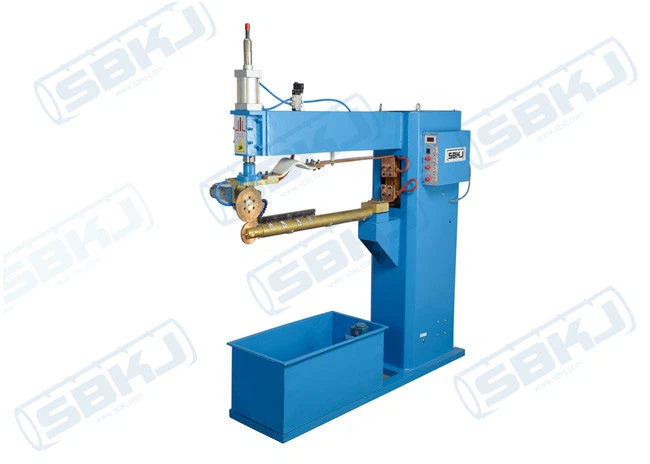

Components of a Stitchwelder
Before we dive into the working principle, let's first familiarize ourselves with the key components of a Stitchwelder:
- Welding Electrodes: These are the conductive components that come into contact with the metal sheets and deliver the electrical current necessary for welding. The electrodes are typically made of copper or a copper alloy and are shaped to match the welding requirements.
- Welding Transformer: The transformer steps down the high voltage from the power source to a lower voltage suitable for welding. It also controls the amount of current flowing through the electrodes, ensuring proper heat generation for welding.
- Control System: The control system regulates the welding process, including the timing, duration, and intensity of the welds. It allows operators to set the desired parameters and monitors the welding operation to ensure quality and consistency.
- Feed Mechanism: The feed mechanism moves the metal sheets through the welding area at a controlled speed. It ensures that the sheets are properly aligned and positioned for welding, minimizing the risk of misalignment or overlapping.
- Cooling System: Welding generates a significant amount of heat, which can damage the electrodes and other components of the Stitchwelder. The cooling system circulates water or another coolant through the electrodes and transformer to dissipate the heat and prevent overheating.
Working Principle of a Stitchwelder
Now that we understand the components, let's explore how a Stitchwelder works:
- Preparation: Before starting the welding process, the operator prepares the metal sheets by cleaning them to remove any dirt, grease, or oxide layers. The sheets are then positioned on the feed mechanism and aligned with the welding electrodes.
- Electrode Placement: The welding electrodes are lowered onto the metal sheets, making contact with the surfaces to be welded. The electrodes apply pressure to hold the sheets together and ensure good electrical conductivity.
- Welding Current Application: Once the electrodes are in place, the control system activates the welding transformer, which supplies a high current to the electrodes. The current flows through the electrodes and the metal sheets, generating heat at the contact points.
- Heat Generation and Welding: The heat generated by the electrical current causes the metal at the contact points to melt and form a weld pool. The control system regulates the duration and intensity of the current to ensure that the weld pool reaches the desired temperature and size.
- Stitch Formation: As the weld pool cools and solidifies, it forms a stitch or a series of stitches along the joint. The feed mechanism moves the metal sheets forward, and the process is repeated at regular intervals to create a continuous series of welds.
- Cooling and Finishing: After the welding is complete, the electrodes are lifted off the metal sheets, and the cooling system continues to circulate coolant to dissipate the remaining heat. The welded sheets are then removed from the Stitchwelder and inspected for quality.
Advantages of Stitchwelding
Stitchwelding offers several advantages over other welding methods, making it a popular choice in many industries:
- Reduced Heat Input: Since Stitchwelding creates individual welds at specific intervals, it requires less heat input compared to continuous welding. This reduces the risk of distortion, warping, and damage to the metal sheets.
- Improved Flexibility: The intermittent nature of Stitchwelding allows for greater flexibility in the joint design. It can accommodate variations in the thickness and shape of the metal sheets, making it suitable for a wide range of applications.
- Increased Welding Speed: Stitchwelders can operate at high speeds, allowing for faster production rates compared to manual welding. This makes them ideal for mass production applications where efficiency is crucial.
- Cost-Effective: Stitchwelding requires less energy and consumables compared to other welding methods, making it a cost-effective solution for many industries. It also reduces the need for post-welding finishing operations, further saving time and money.
Applications of Stitchwelders
Stitchwelders are used in a variety of industries and applications, including:
- HVAC Industry: Stitchwelders are commonly used in the production of Production Of Round Hvac Air Pipe Seaming Welding Air Duct Machine. They are used to join the seams of round and rectangular ducts, ensuring airtight and leak-free connections.
- Automotive Industry: In the automotive industry, Stitchwelders are used to weld various components, such as body panels, frames, and exhaust systems. They provide strong and reliable joints while minimizing the weight and cost of the components.
- Electronics Industry: Stitchwelders are used in the electronics industry to weld circuit boards, connectors, and other electronic components. They offer precise and controlled welding, ensuring the integrity and functionality of the components.
- Sheet Metal Fabrication: Stitchwelders are widely used in sheet metal fabrication to join sheets of different thicknesses and materials. They are used in the production of cabinets, enclosures, and other metal products.
Conclusion
In conclusion, Stitchwelders are versatile and efficient machines that play a crucial role in various industries. Their working principle is based on the generation of heat through electrical current, which melts the metal at the contact points and forms a series of stitches along the joint. Stitchwelding offers several advantages over other welding methods, including reduced heat input, improved flexibility, increased welding speed, and cost-effectiveness.
If you're in the market for a Stitchwelder or need more information about our products, please don't hesitate to contact us. Our team of experts is ready to assist you in finding the right solution for your welding needs. We look forward to working with you and helping you achieve your production goals.
References
- ASM Handbook, Volume 6: Welding, Brazing, and Soldering. ASM International, 1993.
- Welding Handbook, Volume 1: Welding Science and Technology. American Welding Society, 2007.
- Miller Electric Mfg. Co. "Stitch Welding Basics." Accessed [date]. [link-to-miller-electric-article]