

How to ground a welding machine correctly?
Dec 29, 2025
Hey there! As a welding machine supplier, I've seen firsthand how crucial it is to ground a welding machine correctly. It's not just about following safety rules; it's about making sure your welding projects go smoothly and your equipment lasts as long as possible. In this blog, I'm gonna walk you through the ins and outs of grounding a welding machine the right way.
First off, let's talk about why grounding is so important. When you're welding, you're dealing with high voltages and currents. Without proper grounding, there's a risk of electrical shock, which can be life - threatening. Grounding provides a safe path for electrical current to flow in case of a fault. It also helps to reduce electrical interference, which can affect the quality of your welds.
Understanding the Basics of Grounding
Before we get into the steps of grounding a welding machine, it's important to understand a few basic concepts. Grounding involves connecting your welding machine to the earth. The earth acts as a huge conductor that can absorb excess electrical charge.
There are two main types of grounding in welding: equipment grounding and system grounding. Equipment grounding is all about connecting the non - current - carrying metal parts of the welding machine, like the frame, to the ground. This protects you from getting shocked if there's a short - circuit inside the machine. System grounding, on the other hand, is about connecting the electrical supply system to the ground. This helps to stabilize the voltage and prevent electrical faults.
Step - by - Step Guide to Grounding a Welding Machine
Step 1: Choose the Right Grounding Cable
The first thing you need is a good grounding cable. It should be thick enough to handle the electrical current that your welding machine uses. A cable with a gauge of 6 or 8 is usually a good choice for most welding machines. Make sure the cable is in good condition, without any cuts or frayed ends.
Step 2: Locate the Grounding Terminal on the Welding Machine
Most welding machines have a dedicated grounding terminal. It's usually marked with a symbol that looks like a triangle with a line through it. Once you've found it, clean the terminal to make sure there's a good electrical connection.
Step 3: Connect the Grounding Cable to the Welding Machine
Take one end of the grounding cable and connect it securely to the grounding terminal on the welding machine. You can use a clamp or a bolt to make the connection. Make sure it's tight so that there's no loose connection, which could cause electrical resistance and heat up the cable.
Step 4: Find a Suitable Grounding Point
Now, you need to find a good place to connect the other end of the grounding cable to the ground. A metal water pipe is a common choice, as long as it's connected to the earth. You can also use a grounding rod. A grounding rod is a metal rod that's driven into the ground. It should be at least 8 feet long and made of a conductive material like copper or galvanized steel.
Step 5: Connect the Grounding Cable to the Grounding Point
Once you've found your grounding point, connect the other end of the grounding cable to it. If you're using a metal water pipe, you can use a grounding clamp. Make sure the clamp is clean and makes good contact with the pipe. If you're using a grounding rod, you can use a special connector to attach the cable to the rod.

Common Mistakes to Avoid
When grounding a welding machine, there are a few common mistakes that you should avoid. One of the biggest mistakes is using a damaged grounding cable. A cut or frayed cable can increase the risk of electrical shock and cause problems with the grounding.
Another mistake is not making a good connection. If the connection between the grounding cable and the welding machine or the grounding point is loose, it can lead to electrical resistance and heat up the cable. This can not only damage the cable but also increase the risk of a fire.
Also, don't try to use a grounding point that's not suitable. For example, don't use a plastic pipe as a grounding point because it's not conductive.
Grounding for Different Types of Welding Machines
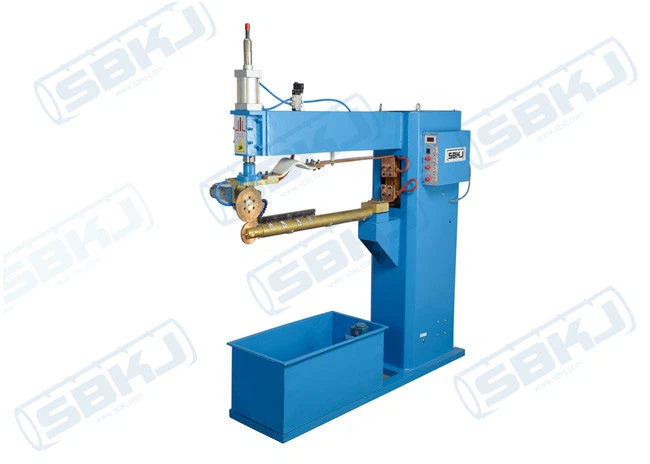
If you're using different types of welding machines, like a Spotwelder or a Seamwelder, the basic grounding principles are the same. However, there might be some specific requirements for each type of machine.
For example, some spot welders might have a higher current output, so you might need a thicker grounding cable. Seam welders, on the other hand, are often used in continuous welding operations, so it's even more important to have a reliable grounding system.
Grounding in a Production Environment
In a production environment, like when using a Production Of Round Hvac Air Pipe Seaming Welding Air Duct Machine, proper grounding is even more critical. There are usually multiple welding machines operating at the same time, which means there's a higher risk of electrical interference and faults.
In a production setting, it's a good idea to have a central grounding system. This involves connecting all the welding machines to a common grounding point. This helps to reduce electrical interference and makes it easier to maintain the grounding system.
Testing the Grounding System
Once you've grounded your welding machine, it's a good idea to test the grounding system. You can use a grounding tester to check if the grounding is working properly. The tester will measure the resistance between the grounding point and the earth. A low resistance indicates a good grounding connection.
Conclusion
Grounding a welding machine correctly is essential for your safety and the quality of your welding projects. By following the steps I've outlined in this blog, you can make sure that your welding machine is properly grounded. Remember to choose the right grounding cable, make good connections, and avoid common mistakes.
If you're in the market for a new welding machine or need any advice on grounding, I'm here to help. Whether you're a hobbyist or a professional in a production environment, we have a wide range of welding machines to meet your needs. Don't hesitate to reach out for more information or to start a procurement discussion.
References
- Welding Safety Standards and Guidelines, American Welding Society
- Electrical Installation Manuals for Welding Equipment