

What is the difference between MIG and TIG welding machines?
May 28, 2025
When it comes to welding machines, MIG (Metal Inert Gas) and TIG (Tungsten Inert Gas) are two of the most commonly used types in the industry. As a welding machine supplier, I often encounter customers who are confused about the differences between these two types of welding machines. In this blog post, I will explain the key differences between MIG and TIG welding machines to help you make an informed decision when choosing the right welding machine for your needs.
1. Welding Process
MIG Welding
MIG welding is a semi - automatic or automatic welding process. In MIG welding, a continuous solid wire electrode is fed through a welding gun into the weld pool. The wire serves as both the filler material and the source of the electric arc. An inert or semi - inert shielding gas is also fed through the welding gun to protect the weld pool from atmospheric contamination. The gas is typically a mixture of argon and carbon dioxide.
The MIG welding process is relatively fast and easy to learn. It is suitable for welding a variety of metals, including mild steel, stainless steel, and aluminum. Due to its high deposition rate, MIG welding is often used in manufacturing, automotive repair, and construction industries where large amounts of welding need to be done quickly.
TIG Welding
TIG welding is a manual welding process. In TIG welding, a non - consumable tungsten electrode is used to create the electric arc. The welder manually adds filler material to the weld pool as needed. Like MIG welding, an inert shielding gas, usually argon, is used to protect the weld area from oxidation and contamination.
TIG welding is known for its precision and high - quality welds. It allows for better control of the heat input and the shape of the weld bead. However, it is a more difficult process to master compared to MIG welding. TIG welding is commonly used in applications where high - quality welds are required, such as aerospace, jewelry making, and high - end automotive manufacturing.
2. Weld Quality
MIG Welding
MIG welding can produce good - quality welds, especially when the right parameters are set. However, the quality of MIG welds can be affected by factors such as the wire feed speed, welding voltage, and the quality of the shielding gas. In some cases, MIG welds may have a slightly rougher appearance compared to TIG welds.
The high deposition rate of MIG welding can sometimes lead to a less - controlled weld bead shape. Additionally, if the welding speed is too fast or the shielding gas is not properly adjusted, the weld may be prone to porosity or lack of fusion.
TIG Welding
TIG welding is renowned for its superior weld quality. The welder has precise control over the heat input and the addition of filler material, which results in clean, smooth, and aesthetically pleasing welds. TIG welds typically have fewer defects such as porosity and inclusions.
The ability to control the arc and the weld pool allows for better penetration and fusion, making TIG welds stronger and more reliable. In applications where the appearance and integrity of the weld are critical, TIG welding is often the preferred choice.
3. Ease of Use
MIG Welding
MIG welding is generally considered easier to learn than TIG welding. The semi - automatic nature of the process means that the wire feed and the shielding gas are usually controlled by the machine, allowing the welder to focus on guiding the welding gun along the joint.
New welders can quickly learn to produce acceptable welds with MIG welding. The process is also less physically demanding compared to TIG welding, as the welder does not need to hold and manipulate a filler rod while maintaining the arc.
TIG Welding
TIG welding requires a higher level of skill and dexterity. The welder needs to control the arc with one hand while adding filler material with the other. This requires a great deal of practice to achieve a consistent and high - quality weld.
The precise control required in TIG welding also means that the learning curve is steeper. It can take months or even years for a welder to become proficient in TIG welding.
4. Welding Speed
MIG Welding
One of the main advantages of MIG welding is its high welding speed. The continuous wire feed and the high deposition rate allow for rapid completion of welding tasks. This makes MIG welding ideal for large - scale production where time is of the essence.
For example, in the automotive industry, MIG welding is used to weld car frames and body panels quickly, increasing the overall production efficiency.
TIG Welding
TIG welding is a slower process compared to MIG welding. The manual addition of filler material and the need for precise control of the arc and the weld pool result in a lower welding speed.
However, the slower speed is often justified in applications where quality and precision are more important than speed. For instance, in the aerospace industry, TIG welding is used to ensure the integrity of critical components, even though it takes longer to complete the welds.
5. Cost
MIG Welding
MIG welding machines are generally more affordable than TIG welding machines. The equipment required for MIG welding is relatively simple, and the consumables, such as the welding wire and the shielding gas, are also less expensive.

The high deposition rate of MIG welding also means that less time is spent on welding, which can result in lower labor costs. Overall, MIG welding is a cost - effective option for many industrial applications.
TIG Welding
TIG welding machines are more expensive than MIG welding machines. The additional features and the higher level of precision required in TIG welding contribute to the higher cost of the equipment.
The consumables for TIG welding, such as the tungsten electrodes and the high - purity shielding gas, are also more expensive. In addition, the slower welding speed of TIG welding can lead to higher labor costs.
6. Applications
MIG Welding
- Manufacturing: MIG welding is widely used in the manufacturing of various products, such as machinery, furniture, and metal structures. Its high speed and ability to weld different metals make it suitable for mass production.
- Automotive Repair: In automotive repair shops, MIG welding is used to repair car frames, body panels, and exhaust systems. The fast welding speed allows for quick repairs, minimizing the downtime of the vehicle.
- Construction: MIG welding is used in the construction industry for welding structural steel, pipes, and other metal components.
TIG Welding
- Aerospace: The aerospace industry requires high - quality welds with strict standards. TIG welding is used to weld aircraft components, such as engine parts, fuel tanks, and airframes, to ensure their safety and reliability.
- Jewelry Making: TIG welding's precision and ability to produce clean welds make it ideal for jewelry making. It allows jewelers to create intricate designs and join precious metals without damaging them.
- High - End Automotive Manufacturing: In the production of high - performance and luxury cars, TIG welding is used for welding critical components, such as suspension parts and engine blocks, to ensure the highest quality.
7. Related Products from Our Company
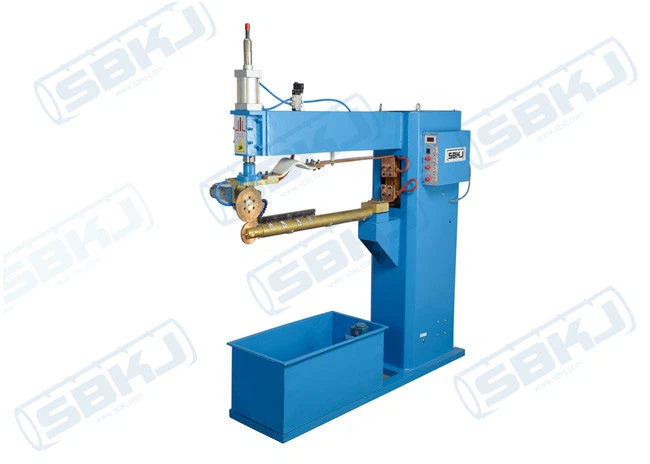
As a welding machine supplier, we offer a wide range of welding machines, including MIG and TIG welding machines. In addition to these, we also provide other related products such as Spotwelder, Production Of Round Hvac Air Pipe Seaming Welding Air Duct Machine, and Stitchwelder. These products are designed to meet the diverse needs of our customers in different industries.
Conclusion
In conclusion, MIG and TIG welding machines have their own unique characteristics and advantages. MIG welding is fast, easy to use, and cost - effective, making it suitable for applications where speed and efficiency are important. On the other hand, TIG welding offers superior weld quality and precision, but it is more difficult to learn and more expensive.
When choosing between MIG and TIG welding machines, you need to consider factors such as the type of metal you are welding, the required weld quality, your budget, and your level of skill. If you are new to welding or need to complete large - scale welding projects quickly, MIG welding may be the better choice. If you are working on high - precision and high - quality applications, TIG welding is likely to be more suitable.
If you have any questions about our welding machines or need help in choosing the right one for your needs, please feel free to contact us. We are always ready to assist you in making the best decision for your welding requirements.
References
- American Welding Society. Welding Handbook.
- O'Shea, J. Welding Processes and Practices.