

What is the forming principle of a Round Duct Machine for spiral ducts?
Sep 24, 2025
As a supplier of Round Duct Machines, I've had the privilege of witnessing firsthand the intricate processes and innovative technologies behind these remarkable pieces of equipment. In this blog, I'll delve into the forming principle of a Round Duct Machine for spiral ducts, exploring the key components, mechanisms, and factors that contribute to its efficient and precise operation.
The Basics of Spiral Ducts
Spiral ducts are widely used in ventilation, air conditioning, and exhaust systems due to their numerous advantages, including smooth airflow, high strength, and easy installation. These ducts are formed by continuously winding a strip of metal, typically galvanized steel or aluminum, into a spiral shape. The resulting spiral seam provides a strong and leak-resistant joint, making spiral ducts an ideal choice for various applications.
Key Components of a Round Duct Machine
A Round Duct Machine for spiral ducts consists of several key components, each playing a crucial role in the duct-forming process. These components include:
- Uncoiler: The uncoiler is responsible for holding and feeding the metal strip into the machine. It ensures a continuous and consistent supply of material, allowing for efficient production.
- Forming Rollers: The forming rollers are the heart of the Round Duct Machine. They shape the metal strip into a spiral by gradually bending it around a central mandrel. The rollers are carefully designed and precision-machined to ensure accurate and uniform duct dimensions.
- Seaming Unit: The seaming unit is used to join the edges of the metal strip together, creating a continuous spiral seam. There are several types of seaming methods, including mechanical seaming, welding, and adhesive bonding. The choice of seaming method depends on the specific requirements of the application and the type of metal being used.
- Cutting Unit: The cutting unit is used to cut the formed spiral duct to the desired length. It can be either a manual or an automatic cutting system, depending on the level of automation and productivity required.
- Control System: The control system is responsible for regulating the operation of the Round Duct Machine. It allows the operator to set the desired duct dimensions, speed, and other parameters, ensuring consistent and accurate production.
The Forming Process
The forming process of a Round Duct Machine for spiral ducts can be divided into several stages:
- Material Feeding: The metal strip is fed from the uncoiler into the forming rollers. The uncoiler ensures a smooth and continuous supply of material, preventing any interruptions in the production process.
- Forming: As the metal strip passes through the forming rollers, it is gradually bent into a spiral shape. The rollers apply a controlled amount of pressure to the metal, causing it to conform to the shape of the central mandrel. The number and arrangement of the forming rollers depend on the diameter and thickness of the duct being produced.
- Seaming: Once the metal strip has been formed into a spiral, the seaming unit joins the edges of the strip together. The seaming process can be either mechanical or welded, depending on the specific requirements of the application. Mechanical seaming involves interlocking the edges of the metal strip using a series of rollers or dies, while welding uses heat to fuse the edges together.
- Cutting: After the seaming process is complete, the formed spiral duct is cut to the desired length using the cutting unit. The cutting can be either manual or automatic, depending on the level of automation and productivity required.
- Inspection and Packaging: The finished spiral ducts are then inspected for quality and dimensional accuracy. Any defective ducts are removed from the production line, and the good ducts are packaged and prepared for shipment.
Factors Affecting the Forming Process
Several factors can affect the forming process of a Round Duct Machine for spiral ducts, including:
- Material Properties: The properties of the metal strip, such as its thickness, hardness, and ductility, can have a significant impact on the forming process. Different metals require different forming parameters, such as roller pressure, speed, and temperature, to achieve the desired results.
- Duct Dimensions: The diameter and length of the duct being produced also affect the forming process. Larger diameter ducts require more powerful forming rollers and a higher level of precision to ensure accurate and uniform dimensions.
- Seaming Method: The choice of seaming method can also affect the forming process. Mechanical seaming is generally faster and more cost-effective than welding, but it may not be suitable for all applications. Welding provides a stronger and more leak-resistant joint, but it requires more specialized equipment and expertise.
- Machine Settings: The settings of the Round Duct Machine, such as the roller pressure, speed, and temperature, need to be carefully adjusted to ensure optimal performance. Incorrect settings can result in poor quality ducts, such as uneven seams, wrinkles, or cracks.
Our Round Duct Machine Product Range
At our company, we offer a wide range of Round Duct Machines for spiral ducts to meet the diverse needs of our customers. Our product range includes:
- Manual Asymmetrical Plate Steel Metal Rolling Machine: This machine is suitable for small-scale production and DIY projects. It is easy to operate and requires minimal maintenance.
- Hydraulic Rolling Machine: Our hydraulic rolling machine is designed for high-volume production. It offers precise control and high productivity, making it ideal for large-scale manufacturing facilities.
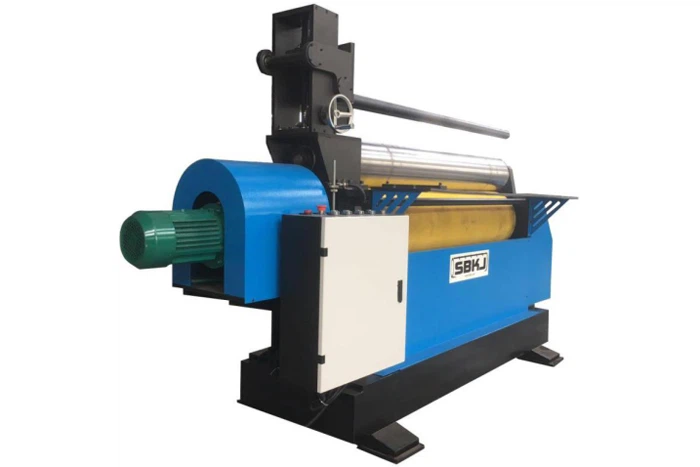
- Round Duct Slip Roll Machine Electric 3 Rolls Plate Rolling Machine: This machine is a versatile and efficient solution for producing round ducts of various diameters. It features an electric drive system and adjustable rollers, allowing for easy and accurate operation.
Conclusion
The forming principle of a Round Duct Machine for spiral ducts is a complex and fascinating process that involves several key components and mechanisms. By understanding the basics of spiral duct formation and the factors that affect the forming process, you can make an informed decision when choosing a Round Duct Machine for your specific application.

If you're interested in learning more about our Round Duct Machines or have any questions about the duct-forming process, please don't hesitate to contact us. Our team of experts is always ready to assist you and provide you with the best solutions for your needs.
References
- Smith, J. (2018). Handbook of Ductwork Design and Installation. New York: Wiley.
- Jones, A. (2019). Spiral Duct Manufacturing: Principles and Practices. London: Elsevier.
- Brown, R. (2020). Metal Forming Technology: A Comprehensive Guide. Chicago: McGraw-Hill.