

What is the production capacity of a Round Duct Former?
Oct 22, 2025
Hey there! As a supplier of Round Duct Formers, I often get asked about the production capacity of these machines. So, I thought I'd sit down and write a blog post to share some insights on this topic.
First off, let's talk about what a Round Duct Former actually is. It's a machine that's used to create round ducts, which are commonly used in HVAC (Heating, Ventilation, and Air Conditioning) systems. These ducts are essential for distributing air throughout buildings, ensuring proper ventilation and temperature control.
Now, when it comes to the production capacity of a Round Duct Former, there are several factors that come into play. The main ones include the type of machine, the material being used, the thickness of the material, and the complexity of the duct design.
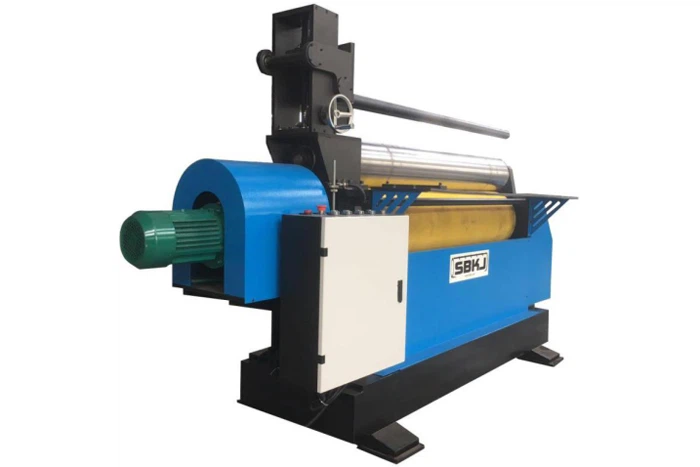
Let's start with the type of machine. There are different types of Round Duct Formers available in the market, each with its own production capabilities. For example, an Electrical-Driven Bending Machine is a popular choice. It's powered by electricity, which allows for precise control and relatively fast production speeds. These machines can typically produce a decent number of round ducts per hour, depending on the size and complexity of the ducts.
On the other hand, a Hydraulic Rolling Machine uses hydraulic power. Hydraulic machines are known for their strength and ability to handle thicker materials. They might be a bit slower in terms of production speed compared to electrical-driven ones, but they can produce high-quality round ducts with more durability.
Then there's the Manual Asymmetrical Plate Steel Metal Rolling Machine. As the name suggests, this machine requires manual operation. It's a more basic option and usually has a lower production capacity compared to the electrically or hydraulically powered machines. However, it can be a cost - effective choice for small - scale operations or for those who have a limited budget.
The material being used also has a significant impact on production capacity. Common materials for round ducts include galvanized steel, stainless steel, and aluminum. Galvanized steel is widely used because it's relatively inexpensive and has good corrosion resistance. It's also easier to work with compared to some other materials, which means the production process can be faster. Stainless steel, on the other hand, is more durable and resistant to corrosion, but it's also harder to shape. This can slow down the production process, reducing the overall production capacity. Aluminum is lightweight and easy to form, so machines can usually produce ducts from aluminum at a faster rate.
The thickness of the material is another crucial factor. Thicker materials require more force to bend and shape. So, if you're using a thick - gauge material, the machine will need to work harder, which can lead to slower production speeds. For instance, a machine might be able to produce a large number of thin - walled round ducts in an hour, but when it comes to thick - walled ducts, the production capacity will drop significantly.
The complexity of the duct design also matters. Simple round ducts with a standard diameter and no additional features can be produced much faster than ducts with complex shapes, such as those with bends, offsets, or special connections. The more complex the design, the more time the machine will need to spend on each duct, reducing the overall number of ducts that can be produced in a given period.
To give you a rough idea of production capacity, let's assume we're using a medium - sized electrical - driven bending machine to produce standard - sized round galvanized steel ducts with a thickness of around 0.5 - 1 mm. This machine could potentially produce anywhere from 20 to 50 round ducts per hour. However, if we switch to a more complex design or a thicker material, this number could drop to 10 - 20 ducts per hour.
If you're running a large - scale HVAC installation project, you'll need a machine with a high production capacity. In such cases, a hydraulic rolling machine might be a better option, even though it's a bit slower, because it can handle thicker materials and produce more durable ducts. For smaller projects or workshops, a manual machine or an electrical - driven bending machine could be sufficient.
In conclusion, the production capacity of a Round Duct Former is not a fixed number. It depends on a variety of factors, including the type of machine, the material, the material thickness, and the duct design. As a supplier, I understand that every customer has different needs. Whether you're looking for a high - speed production machine for large - scale projects or a cost - effective option for small - scale operations, we have a range of Round Duct Formers to meet your requirements.
If you're interested in learning more about our Round Duct Formers or want to discuss your specific production needs, don't hesitate to reach out. We're here to help you find the right machine for your business and ensure that you get the best value for your money.

References
- HVAC System Design Manuals
- Industry Reports on Duct Manufacturing Equipment
- Manufacturer's Specifications for Round Duct Formers